
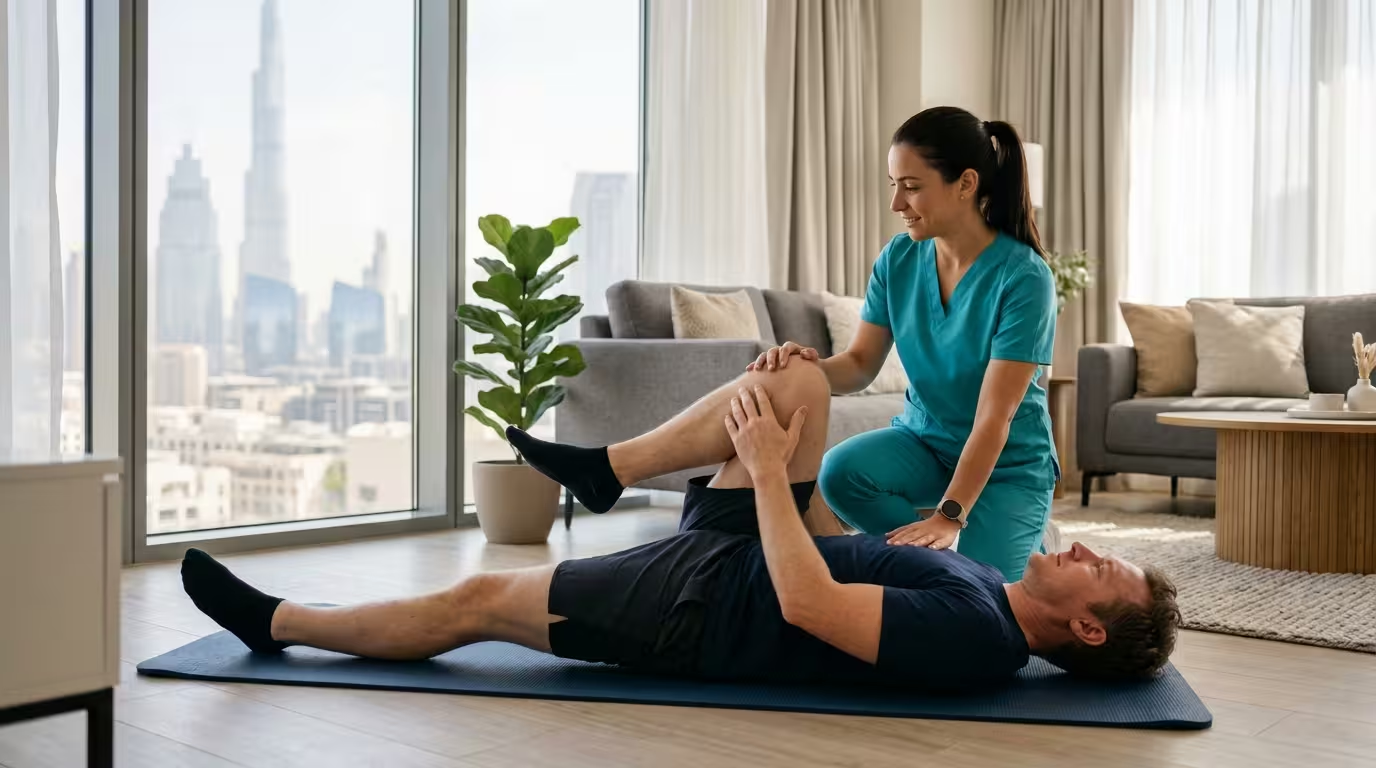
Four in five people get back pain at some point, and many react the same way: lie down and hope it passes. Guidelines warn that bed rest beyond two days does harm, while gentle movement speeds recovery. Done properly, physiotherapy for back pain at home gives you a plan from day one, without the waiting room.
What Home Physiotherapy Covers
Most low back pain is mechanical, which means no specific disease such as a fracture, infection or cancer is behind it. In one clinical review, mechanical causes accounted for about 97% of cases. A physiotherapist assesses how you move, explains what is happening, and builds a plan around activity, exercise and posture. Physiotherapy for back pain at home delivers that plan where you actually sit and bend.
A Simple Treatment Plan
Here is how physiotherapy for back pain at home typically unfolds.
- First few days: Keep moving. Take short walks, change position often and use heat, which may reduce pain and improve function in acute back pain. Take pain relief only as your doctor or pharmacist advises.
- Weeks one to six: Four to six weeks of conservative care is appropriate when no red flags are present. About 90% of episodes resolve within six weeks, whatever the treatment.
- After four to six weeks: If pain is not improving, see your doctor. Strengthening exercises are better supported for subacute and chronic pain than for the first days of an acute episode.
Five Exercises to Start With
These gentle movements are commonly recommended to reduce stiffness. Aim for 2 to 3 sets of 8 to 10 repetitions, little and often.
- Knee rolls: Lie on your back, knees bent, and slowly lower both knees to one side, then the other.
- Pelvic tilts: Flatten your lower back into the bed, hold two seconds, then release.
- Knee to chest: Bring one knee up until you feel a comfortable stretch, then switch.
- Bridge: Lift your hips slowly off the floor, then lower them with control.
- Cat camel: On hands and knees, gently round your back, then let it sag.
If an exercise makes your symptoms worse, take a break and speak to your doctor or physiotherapist.
When to See a Doctor
Get urgent medical help if back pain comes with:
- New bladder or bowel problems
- Numbness around the buttocks, genitals or inner thighs
- Severe or rapidly worsening pain
- Fever, pain after a fall or injury, or a history of cancer
These can point to cauda equina syndrome, infection, fracture or cancer. They are rare, but they cannot wait.
Book Physiotherapy for Back Pain at Home with Magenta Homehealth
Back pain should not keep you away from work or family for weeks. Magenta Homehealth can arrange physiotherapy for back pain at home with a personal plan and exercises you can follow safely. Contact Magenta Homehealth today and book your home assessment.
Frequently Asked Questions
1. Is physiotherapy for back pain at home effective?
Yes, when it follows an assessment and a clear plan. Physical therapy has good evidence for acute back pain, and home visits make daily exercise easier to keep up.
2. Should I rest when my back hurts?
Only briefly. Guidelines advise staying active and warn that bed rest beyond two days is harmful. Return to normal activity as pain allows.
3. How long does back pain usually last?
Most episodes improve within weeks, and about 90% resolve within six weeks. Pain lasting beyond four to six weeks deserves a medical review.
4. Which exercises are safest to begin with?
For physiotherapy for back pain at home, gentle movements such as knee rolls, pelvic tilts and bridges are common starting points. Stop if symptoms worsen.
5. Can heat help?
Heat therapy may reduce pain and improve function in acute back pain. Use a warm pack and check your skin.
6. Do I need a scan before starting?
Usually not. Imaging is typically not needed in the first six weeks unless red flags are present.
7. What are the warning signs?
Bladder or bowel changes, numbness around the groin or buttocks, fever, severe worsening pain or pain after injury need urgent care.
8. Can I continue working?
Staying at work, or returning early, is generally encouraged. You do not need to be pain free first, and your therapist can adjust tasks.
9. Will my back pain return?
It may recur, but recovery is usually good. Regular exercise and staying active help reduce the chance of repeat episodes.
10. Who should avoid home exercises without advice?
Anyone with red flag symptoms, recent injury or pain that keeps worsening should see a doctor first. Pregnancy also calls for tailored advice.
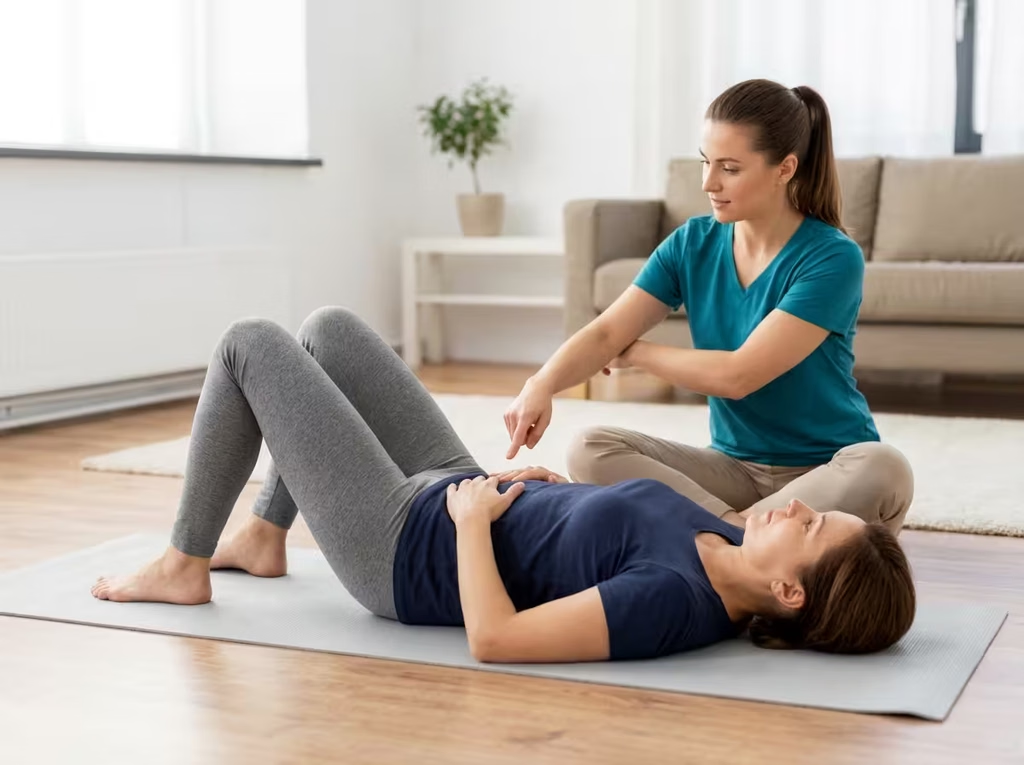
Physiotherapist guiding a patient through a back stretch during a home physiotherapy session in Dubai . Patient doing a gentle back pain exercise at home with a physiotherapist demonstrating
Read More: How to Find the Best Physiotherapy Near Me in Dubai